
Slap Beat
FourM Inc.Arcade
3.857.00 Reviews
- Version
- 1.09
- Installs
- 1.00M
- Age Rating
- Everyone 10+
Screenshots
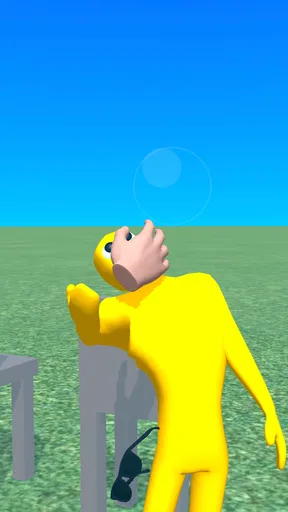
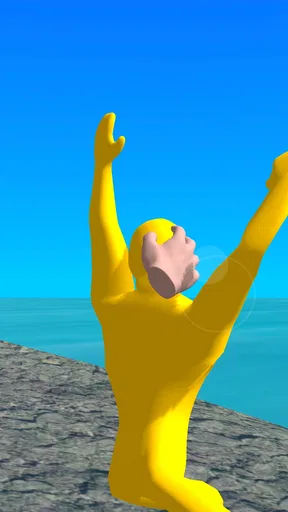
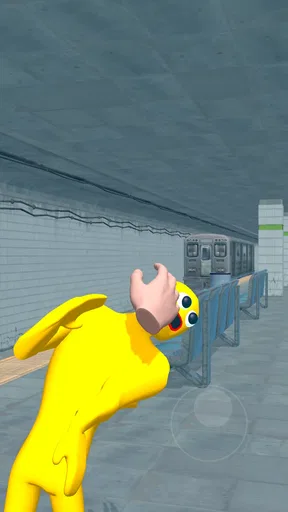
Our Review of Slap Beat
 Analysis by Appyee
I went into Slap Beat expecting a quick arcade distraction, and that is exactly where it makes the most sense. Developed by FourM Inc., this free game is built around a very simple idea: slap and pat enemies in time with the action. Its short store description, “Slap Beat,” is almost bluntly accurate. There is no attempt to present it as a deep role-playing game or a long-form adventure. The appeal is immediate interaction, quick reactions, and the satisfaction of getting a simple movement right.
That simplicity is both its strongest quality and its biggest limitation. I could understand the basic premise quickly, which makes the game easy to pick up when I had only a few spare minutes. At the same time, players who want a detailed progression system, a large collection of modes, or a more strategic arcade experience may find the concept too narrow. My overall impression is that this is best treated as a focused reflex game rather than something intended to replace a larger mobile gaming hobby.
How the free arcade experience feels in practice
The most important thing to understand is that the game’s value comes from access rather than from a purchase decision. Slap Beat is free, so the initial question is not whether it justifies a price but whether its small, direct gameplay loop deserves space on your phone. For me, the answer depends heavily on what I want from a session. When I want something that can be opened without learning a complicated control scheme, the game has a clear advantage over many more elaborate arcade titles.
The central slap-and-pat concept gives the game an unusually readable identity. Instead of asking me to manage several systems at once, it keeps attention on recognizing the moment to act and responding cleanly. That can make a short session feel satisfying even when I am not in the mood to follow a story or build a character. The game is also listed for Everyone 10+, which fits the accessible presentation while still signaling that it is aimed beyond very young children.
Its audience is already fairly broad. The game has passed one million installs and holds an average rating of 3.8 from around 2.2 thousand ratings. I would not treat those figures as proof that it will suit every player, but they do suggest that the straightforward format has reached a meaningful mobile audience. The smaller body of written feedback, with 57 reviews, is more useful as a reminder to judge the hands-on loop for yourself rather than relying only on a headline score.
I also appreciate that the game does not need a large time commitment to make sense. A common mobile scenario is waiting for a bus, taking a short break between tasks, or sitting down for a few minutes before bed. In those moments, a compact arcade game can be more practical than one that expects a long uninterrupted session. Slap Beat fits that use case because its premise can be understood immediately, even if improving your reactions takes repeated attempts.
The control idea is easy to grasp, but timing still matters
The simple controls should not be confused with a completely effortless experience. A game based on slapping and patting enemies lives or dies by how clearly it communicates the right moment to move. When the visual rhythm is easy to read, the interaction feels pleasantly physical despite taking place on a touchscreen. I found that the enjoyment comes less from planning several moves ahead and more from staying alert, reading what is in front of me, and avoiding careless taps.
That makes the game a reasonable choice for players who enjoy reaction-based challenges but do not want a traditional endless runner. In an endless runner, the main pressure often comes from steering, jumping, and avoiding obstacles while the scene constantly moves forward. Slap Beat offers a more concentrated form of attention. The trade-off is that it may feel less varied if you prefer games where movement, exploration, collection, and combat all develop together.
One useful way to approach it is to play in short focused bursts rather than treating every attempt as a serious test. I found that rushing made the basic interaction less reliable. Pausing mentally for a moment to identify the target before tapping is more useful than simply moving faster. This is a small but important distinction: the game rewards controlled reactions, not just frantic screen activity. That makes it more approachable for someone who is willing to improve, while still leaving room for frustration when a mistake feels avoidable.
What the version and device requirements mean
The current version is 1.09, and the listed minimum operating system is Android 7.1. For anyone using an older Android phone, that requirement is worth checking before making room for the game. It is not an especially demanding compatibility threshold by modern standards, but older devices can still differ in responsiveness, touch accuracy, and general smoothness. A reflex game is more sensitive to those differences than a turn-based puzzle title because delayed input can affect the entire experience.
I would therefore judge the game on the phone where I intend to play it, not on another device owned by a friend. If taps feel inconsistent, first make sure the issue is not the screen, a thick protector, or background performance problems. This is one of the less obvious considerations with a title built around direct touch reactions: even a well-designed interaction can feel unfair when the hardware does not register it cleanly.
The age rating also helps define the kind of recommendation I would make. It is suitable for a general audience aged 10 and above, but I would still present it as a reaction arcade game rather than a universal family activity. Younger players may understand the premise quickly, while older players may be more interested in improving timing and consistency. The game’s appeal is not tied to a particular age so much as to a willingness to repeat a simple action and become more accurate.
Where the free access delivers real value
Because there is no purchase price, the strongest value proposition is low commitment. I can try it without deciding whether a larger paid game is worth the money, and I can remove it just as easily if the loop does not hold my attention. That is a meaningful benefit for casual players who download games selectively or who want a quick change from their usual apps.
The free format also makes it easier to recommend to a friend with a specific warning: try it for the core interaction, not because it promises a huge amount of content. That distinction keeps expectations realistic. If you enjoy the sensation of reacting to enemies and refining your timing, the game can provide worthwhile entertainment without asking for a financial commitment. If you need a broad range of activities to stay interested, free access alone will not solve that mismatch.
In my experience, the best way to judge its value is to notice whether the second or third session feels different from the first. The first session is mostly about understanding the idea. Later sessions reveal whether you enjoy the rhythm of recognition, tap, and correction. If that loop becomes satisfying, the game earns its place as a small repeatable diversion. If it feels repetitive almost immediately, there is little reason to force yourself to continue simply because it costs nothing.
Another practical advantage is that the game can serve as a short mental reset. I would not call it a relaxation app, since reaction pressure can be stimulating rather than calming, but it can interrupt a dull stretch of waiting. The important trade-off is that the same focus that makes it engaging can make it unsuitable when I am already tired or distracted. A slower puzzle game may be a better alternative at those times.
Trade-offs that are easy to miss before playing
The first trade-off is depth versus immediacy. Slap Beat gets to its idea quickly, which is excellent for accessibility, but that also means the game has less room to surprise me than a broader arcade package. Players who measure value by the number of systems, environments, or long-term objectives may see the focused design as thin. Players who measure value by how quickly a game becomes playable may see the same design as refreshingly disciplined.
The second trade-off is precision versus device comfort. A touch-based reaction game asks for more consistent contact with the screen than a game where a missed tap merely slows progress. I found it useful to hold the phone securely and keep my tapping hand relaxed. Overly aggressive tapping does not make the response better; it can make the session feel more tiring and less controlled. This is a small technique, but it changes how fair and comfortable the game feels during repeated attempts.
The third trade-off is repetition versus improvement. Repetition is not automatically a weakness in arcade games. Repeating a compact challenge can be the whole point when each attempt encourages better timing. However, the player has to enjoy that kind of self-improvement. Someone looking for constant new discoveries should choose a more varied game, while someone who likes chasing a cleaner response may appreciate the narrow focus.
There is also a difference between playing casually and playing competitively. For casual use, the simple premise is an advantage because I can stop after a brief session without losing track of a complicated campaign. For competitive-minded players, the experience may depend on whether the available challenge feels meaningful enough to justify repeated practice. I would recommend trying the game before assuming that its basic controls will provide long-term motivation.
One habit that helped me evaluate it fairly was separating mistakes caused by poor attention from mistakes caused by unclear reading of the scene. If I was distracted, the game felt harder for a reason that was not necessarily a design flaw. If I was focused and still could not tell what action was expected, that pointed to a more important usability problem. This distinction matters with any reflex title, but especially with one whose entire identity rests on a small number of actions.
Who is most likely to enjoy it
I would recommend Slap Beat to someone who wants a free arcade game with an immediately understandable premise and a low time commitment. It is a good fit for players who enjoy reaction challenges, quick touch interactions, and the modest satisfaction of becoming more consistent. It can also work for a person who usually avoids complex mobile games because the learning curve feels like a chore.
It is particularly suitable for short waiting periods. Imagine having a few minutes before an appointment: a story-heavy game may be inconvenient because stopping midway can break the flow, while a simple reaction game can be opened, played, and closed without much preparation. That is where I see the clearest everyday value. It is not trying to become the center of your gaming life; it works better as a small, ready-to-use distraction.
I would be more cautious about recommending it to players who want deep progression, extensive customization, or a large variety of arcade genres in one package. A conventional endless runner may be better if you enjoy constant movement and obstacle avoidance. A rhythm game may be a stronger choice if music and structured beats are the main attraction. A puzzle game may suit you more if you prefer thinking time over rapid reactions. Slap Beat has a specific lane, and its free status does not make those differences disappear.
Parents and guardians should also consider the individual player rather than relying only on the Everyone 10+ label. A child who enjoys quick hand-eye challenges may take to it immediately, while another may find repeated failures irritating. The same is true for adults. Some people enjoy a compact game precisely because it does not demand much; others need more variety before they feel that their time has been well spent.
My final recommendation for potential players
After spending time with it, I see Slap Beat as a focused free arcade experiment that succeeds when its narrow purpose matches the player’s mood. FourM Inc. has chosen an idea that is easy to explain and easy to test: react to enemies with slaps and pats, then decide whether that interaction is satisfying enough to repeat. That clarity is valuable, especially on mobile, where many games take longer to reveal what they actually want from the player.
The game’s 3.8 average rating reflects a reasonably positive but not overwhelming reception, and that feels consistent with my own balanced view. I enjoyed the directness, the quick sessions, and the way a basic action can become more demanding once I try to perform it carefully. I also recognize that the same simplicity may limit its staying power for anyone expecting a larger arcade experience.
My verdict is to try it if you want a free, compact reaction game and are comfortable with a deliberately narrow gameplay idea. There is no paid entry decision to weigh, so the most sensible approach is to test whether the slap-and-pat loop holds your attention beyond the first novelty. If you want immediate action with almost no setup, it is worth a trial; if you need depth and variety, skip it in favor of a broader alternative.
Verdict
Strengths of Slap Beat
- Simple tap controls make the game easy to pick up.
- Short rounds are ideal for quick gaming sessions.
- Rhythm-based challenges can improve timing and concentration.
- Bright visuals and energetic music keep gameplay engaging.
- Increasing difficulty provides a satisfying challenge over time.
Limitations of Slap Beat
- Gameplay may feel repetitive after extended sessions.
- Success depends heavily on precise timing and quick reactions.
- Some players may find the difficulty spikes frustrating.
- Music and sound effects can become distracting during long sessions.
- Limited gameplay variety may reduce its long-term appeal.
Other Releases by FourM Inc.
View All
Ragdoll Capture
Arcade4.6
Similar Picks in This Category
View All
Subway Surfers
SYBO Games4.6

Stickman Party 234 MiniGames
PlayMax Game Studio4.6

Subway Princess Runner
Ivy4.4

Temple Run
Imangi Studios4.2

Zombie Tsunami
Mobigame SAS4.6

Stack Ball - Crash Platforms
CASUAL AZUR GAMES4.5
Frequently Asked Questions
What is Slap Beat and how does the gameplay work?
Slap Beat is a rhythm-based music game in which you interact with songs by tapping, swiping, or following visual cues in time with the beat. The main challenge is maintaining accuracy while the patterns become faster and more complex. After trying it, the controls feel easy to understand, although mastering difficult tracks requires good timing, concentration, and repeated practice.
Is Slap Beat free to download and play?
Slap Beat can generally be downloaded without an upfront purchase, but the available content and monetization may vary depending on the Android or iOS version. Players should expect possible advertisements, optional in-app purchases, or unlockable songs and features. Before downloading, it is worth checking the store listing for current prices, subscription details, and whether purchases are required for full access.
Does Slap Beat require an internet connection?
An internet connection may be needed for the initial download, updates, advertisements, account features, and certain online content. Some gameplay elements may work offline once the necessary files have been installed, but this can depend on the version and the selected song. If you plan to play while traveling, test the game offline first rather than assuming every feature will be available.
Is Slap Beat suitable for children and casual players?
Slap Beat is relatively accessible because its basic controls are simple and the game can be enjoyed in short sessions. However, the difficulty can increase quickly, especially on faster songs or advanced levels. Parents should review the app’s age rating, advertising, chat or social features, and in-app purchase settings. Casual players can enjoy the easier content, while experienced rhythm-game fans may prefer the harder challenges.
What devices are compatible with Slap Beat, and does it perform well?
Compatibility depends on the specific release and the operating system version, so users should confirm the requirements on the official Google Play or App Store page. On supported devices, performance is usually influenced by available storage, memory, screen responsiveness, and audio latency. Keeping the device updated and closing unnecessary background apps can help reduce stuttering and improve timing accuracy during play.
Play our best games!


